The question was never which tool is better. It's which one fits the project in front of you.
For a few years, comparing Framer and Webflow was simple. Webflow was the robust choice for building professional websites without living in code. Framer was the design-native one, fast and visual, great for landing pages and smaller sites.
In 2026, that comparison got a lot less obvious. Framer grew up in CMS, SEO, localization, analytics, even native A/B testing. Webflow kept expanding its own infrastructure for CMS, localization, analytics, experimentation, and marketing operations at scale.
So the question stopped being "which one can build a professional site?" Both can. The real question now is which one fits the way this project needs to be built, maintained, and scaled.
Framer: when speed and creative freedom matter most
For a designer, Framer feels natural from the first minute. The canvas, components, and breakpoints map closely to how design teams already work. You try layouts, change compositions, test interactions, and reach the browser with far less friction between the idea and the execution.
That matters. On projects where art direction, storytelling, motion, and launch speed are the priority, Framer shortens the road from "this is in Figma" to "this is live."
It's especially strong for institutional sites, landing pages, portfolios, campaigns, and brand-forward startup sites. And it's no longer fair to treat it as a small-site tool. It has a visual CMS, localization, SEO management, redirects, automatic sitemaps, analytics, and native A/B testing.
Two of ours show the range. vrdnt, a coworking brand, went from identity to a live Framer site in weeks, animation and all. Vintage Funds, an investment firm, got a rebuilt sitemap and a fast, high-performance Framer site that plugs into their CRM and reads as trustworthy the second it loads.

The difference isn't really in what it can do. It's in how it invites you to build. Framer rewards speed. You open, create, test, publish, change. For a lot of projects, that's exactly what matters.
Webflow: when structure matters more than speed
Webflow starts from a different mindset. Working in it is closer to building a visual system on the real logic of the web: classes, structure, components, variables, and explicit relationships between elements.
That means a steeper learning curve. It also means structural discipline. On a project with dozens or hundreds of pages, multiple Collections, complex content relationships, several teams running the site, or a marketing operation that keeps growing after launch, that structure earns its keep.
The CMS is still one of Webflow's strongest arguments, with an architecture built to relate content, work with Collections, and organize larger structures. And the platform keeps moving beyond the build itself. Analyze, Optimize, and Localize point to a system for the people who operate, measure, and evolve a site, not just the ones who build it.
Put simply, Webflow makes more sense when the website stops being a project and becomes an operation.
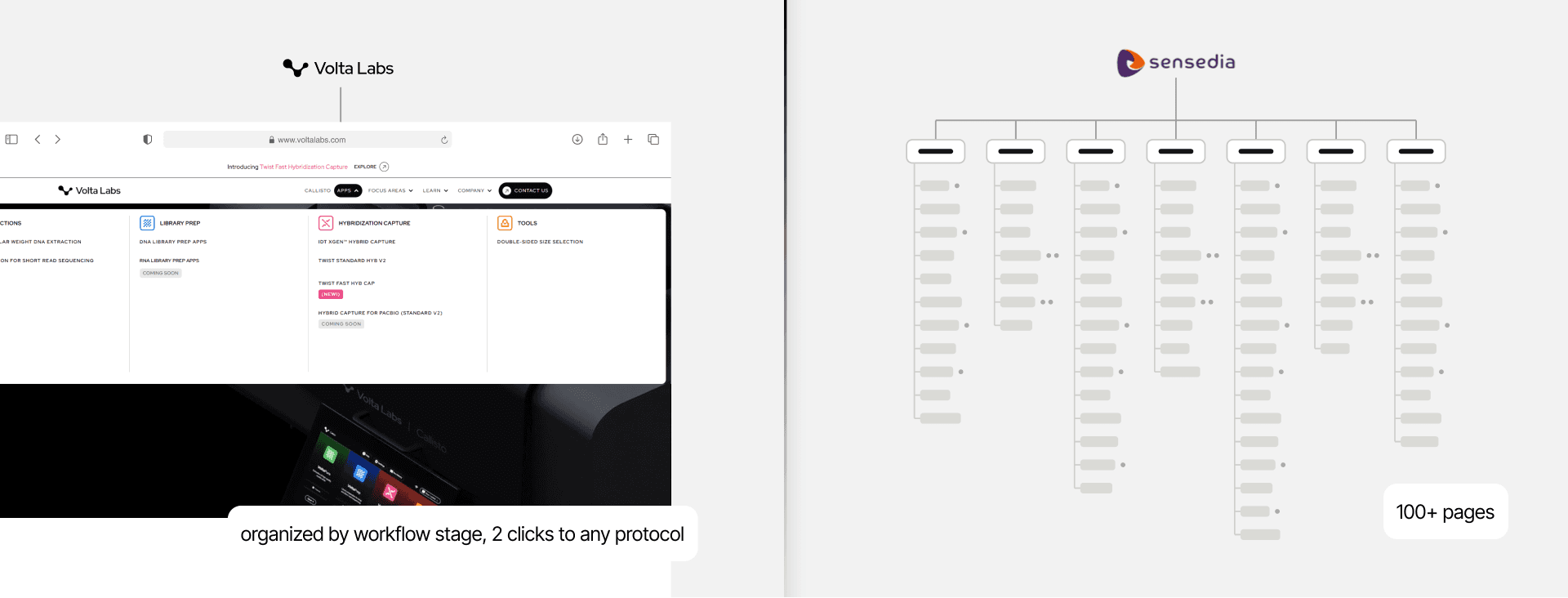
Volta Labs is a clean example. Their bioscience catalog grows every quarter, so we built the site in Webflow around that growth: a mega-menu organized by workflow stage instead of product name, and a CMS where every new product is an entry, not a new build. A lab director finds their exact protocol in two clicks.
Sensedia is the scaled-up version of the same logic, a 100-plus page Webflow ecosystem where the structure is the whole product.
So Framer is for design and Webflow for complex projects?
Not exactly. That's probably the shortcut that causes the worst decisions.
You can build visually sophisticated sites in Webflow. You can build far more than a landing page in Framer.
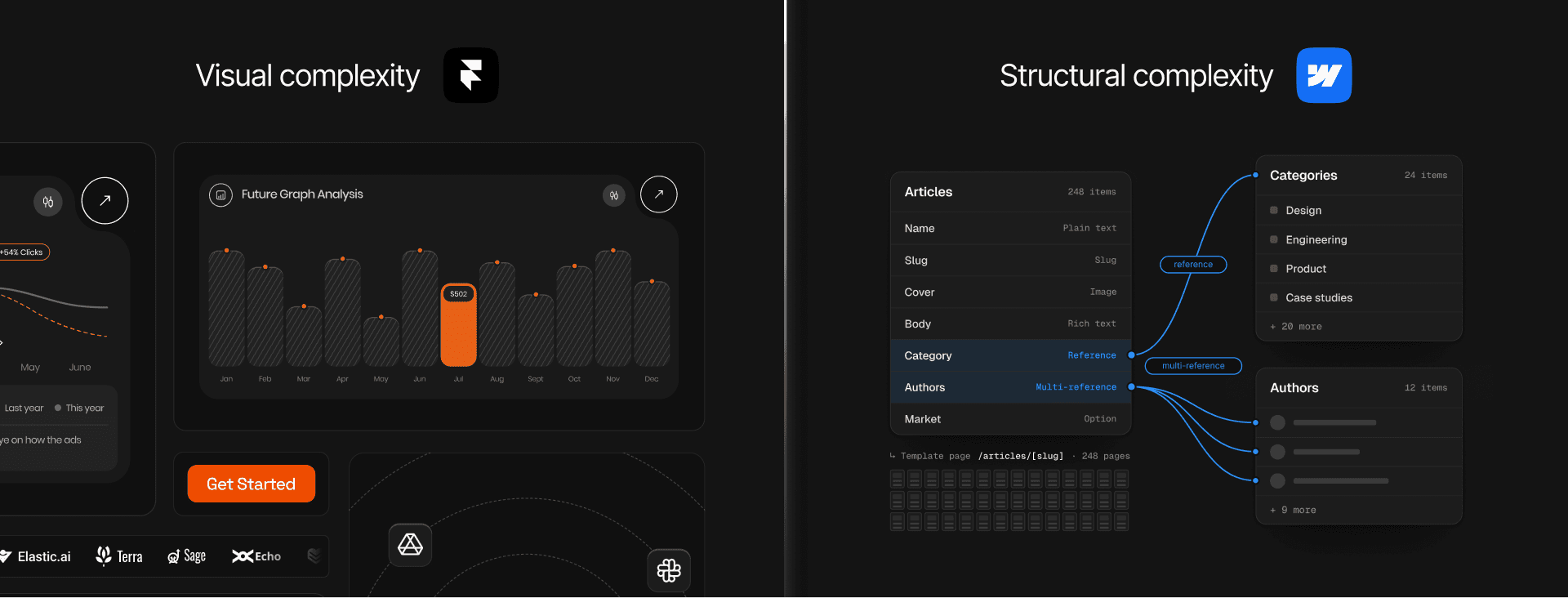
The line between them keeps getting thinner, real difference is the kind of complexity you want to manage. Framer leans toward visual complexity. Webflow leans toward structural complexity.
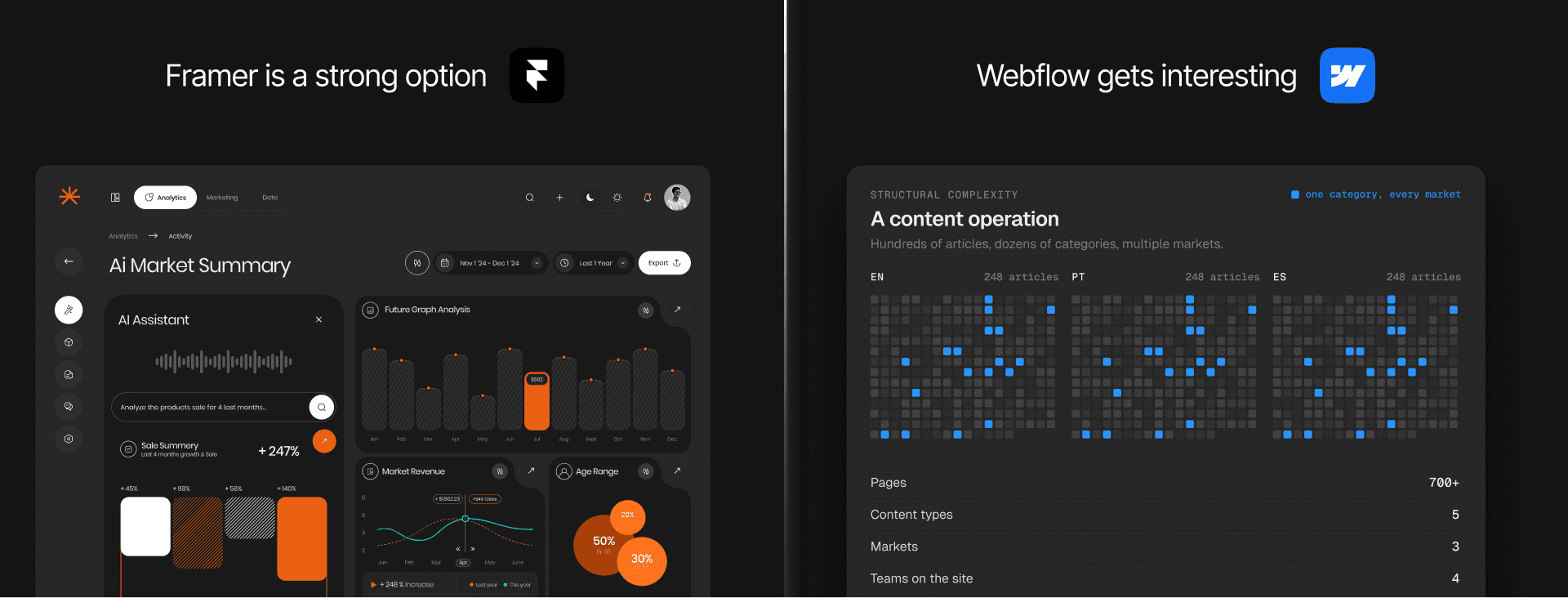
Picture a company launching a SaaS product. Home, Product, About, Pricing, a few case studies, a blog. Strong visual identity, some animation, a marketing team updating content constantly. Framer is a strong option.
Now picture a company with hundreds of articles, dozens of categories, different content types wired together through the CMS, programmatic pages, multiple markets, and a bigger team working the site continuously.
Webflow gets particularly interesting. Not because Framer can't grow, but because the cost of managing that structure starts to matter as much as the freedom to design it.
And SEO?
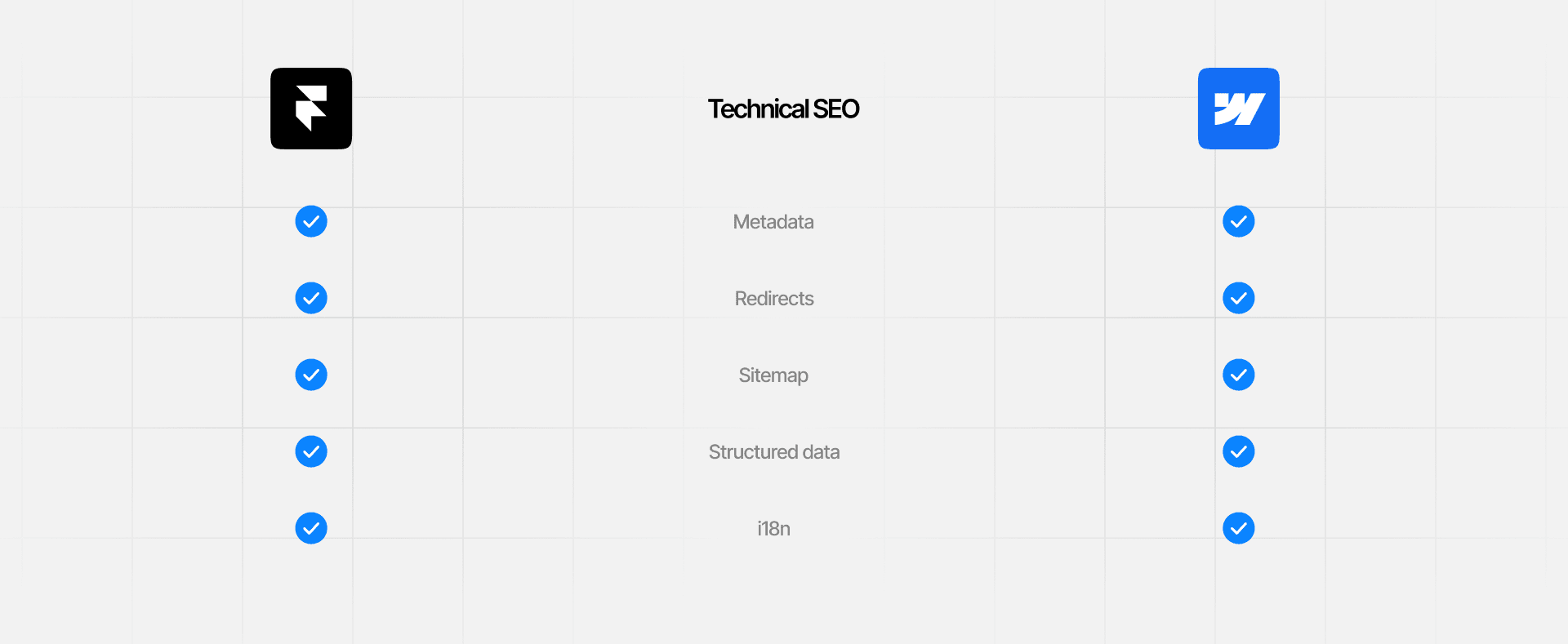
Another argument that got old. "Webflow is good for SEO and Framer isn't" no longer describes either platform.
Framer gives you metadata, indexing, semantic markup, redirects, sitemap, robots.txt, and structured data. Webflow gives you an equally complete level of control over technical SEO, redirects, sitemap, metadata, and international structures.
In practice, for most projects, the platform is rarely the main SEO limiter. Information architecture, content, performance, authority, keyword strategy, internal linking, and technical execution matter far more than which logo is on your login screen.
So which one should you choose?
The least useful answer is "it depends." Here's the better way to look at it.
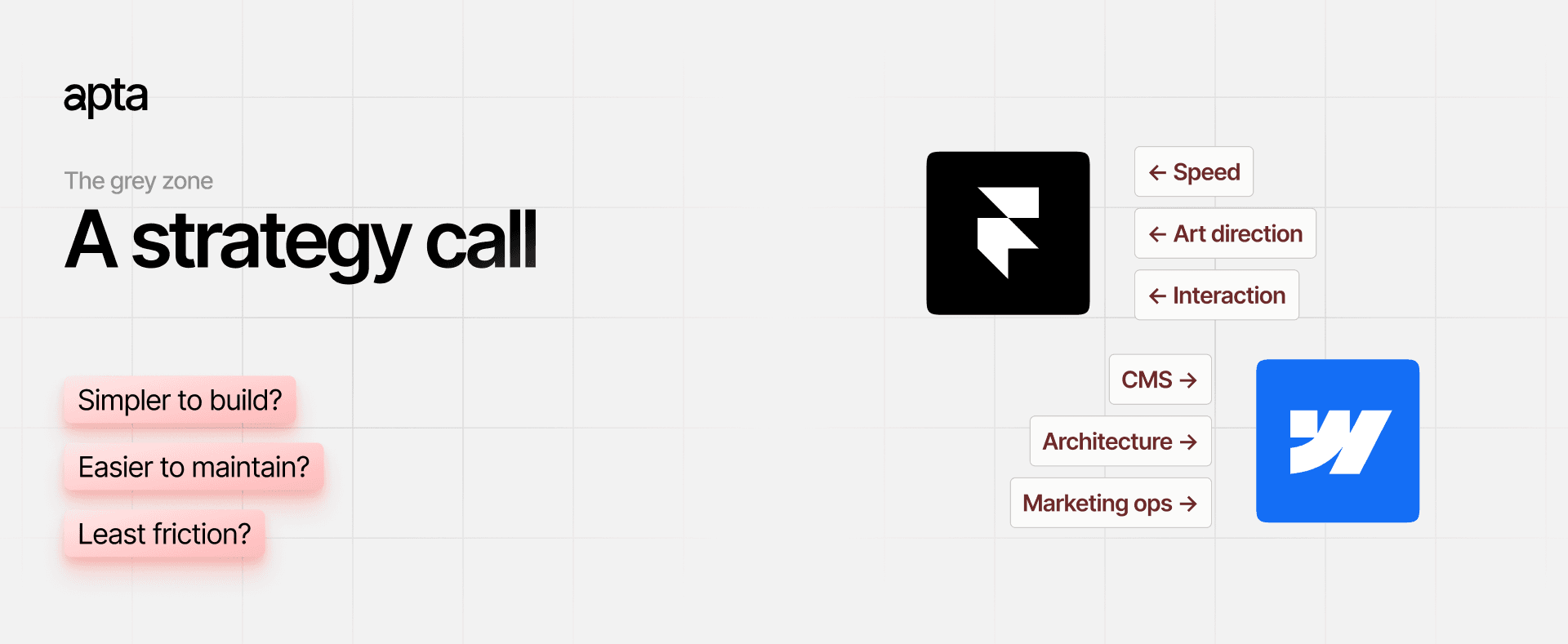
If the project is about speed, art direction, interaction, and turning design into something published fast, Framer probably belongs at the top of the list. If it's about CMS, content organization, architecture, marketing processes, and maintaining a larger structure, Webflow probably deserves more attention.
And in a lot of projects there's a huge grey zone where either would work well. That's exactly where the decision stops being technical and becomes strategic. Which one makes the project simpler to build? Which one is easier to maintain? And above all, which one adds the least friction to what you're actually trying to do?
The best tool isn't the one with the longest feature list. It's the one you forget you're using while you build the right product.
Where we come in
We build in both. That's the part most shops won't tell you, because most have one tool to sell. We don't. We choose Framer or Webflow per project, based on how it needs to be built, maintained, and scaled, not based on what we feel like using that week.
So if you're staring at this decision for your own site or a client's, that's a conversation we're glad to have.