More Than a Style Guide
By
Bruno Peres

Every time a brand grows, it gets harder to keep it looking like itself.
New campaign, market, a deck, another landing page, and each one quietly drifts a little further from the last. For an agency, that drift is expensive.
It's hours of rework, assets that don't quite match, and a brand that looks slightly different everywhere it shows up. Multiply that across every client and every deadline, and consistency becomes the first thing that breaks.
A brand system is how you stop that from happening.
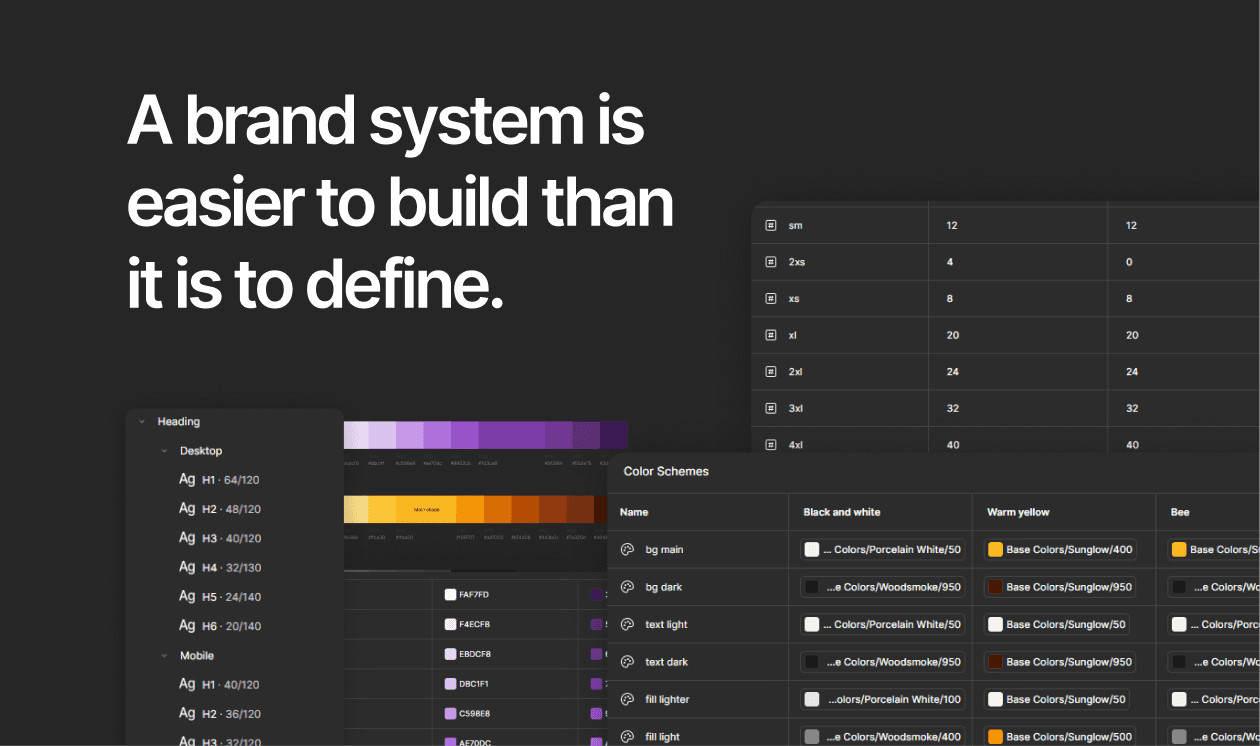
What a brand system actually is
The term stretches across a lot of things: design systems, brandbooks, style guides, asset libraries. There's no clean line around what counts and what doesn't. What matters is what it does.
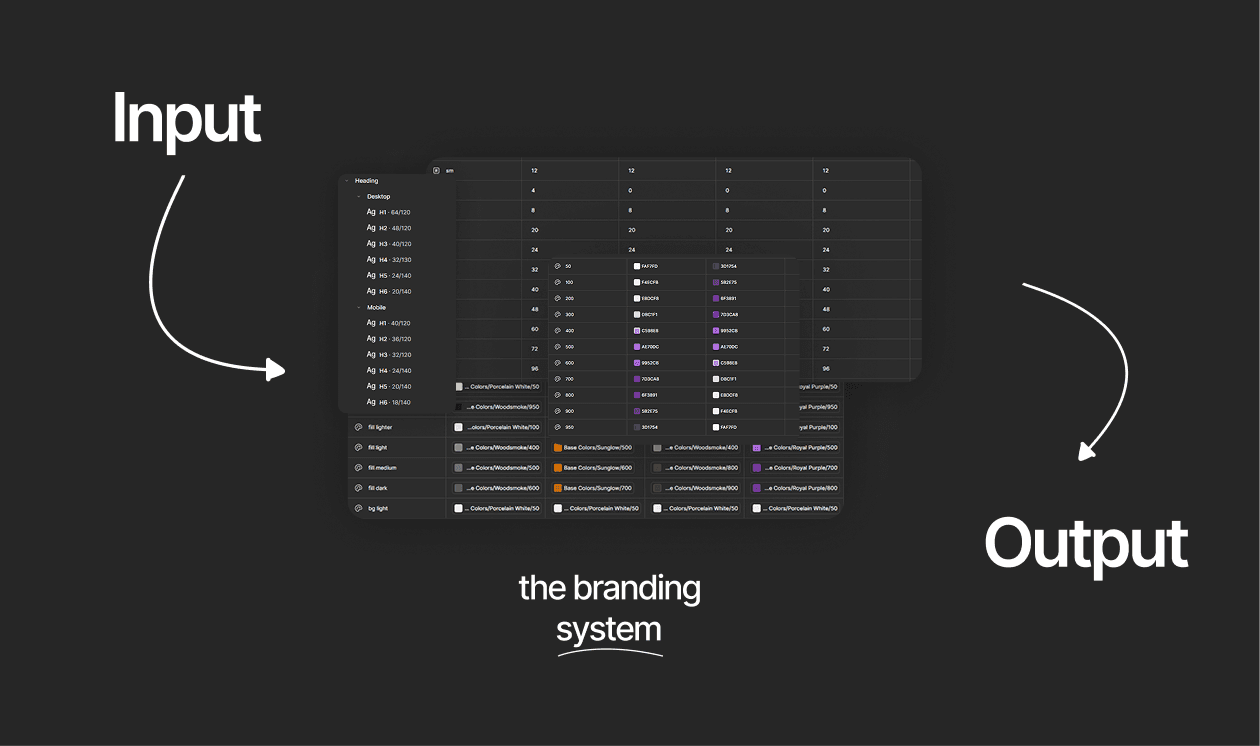
A brand guide describes the brand. A brand system produces it: give it an input and it hands back something that already fits, without anyone rebuilding the rules from scratch.
A guide is a document your team has to interpret. A system is closer to a machine that keeps everyone on-brand automatically, no matter who is at the keyboard.
Why your business needs one
Here is what a real brand system actually buys you.
Speed: Changing a brand color across every asset used to mean a designer opening every file by hand. With a proper system, it is a single click, and everything re-colors at once, still on-brand. Work that took a day takes seconds.
Consistency: Every asset traces back to the same source, so nothing drifts. The brand looks like itself on a pitch deck, a landing page, and a social post, without anyone having to police it.
Less dependency: When the brand lives in a system instead of in one designer's head, you are not held hostage by who is available. Anyone on the team can produce on-brand work, and quality does not dip the week that one person is out.
Scale: New campaign, market, or format: the system produces it. You are not restarting design from zero every time, which is exactly what quietly kills margins on high-volume work.

What it looks like when it's done right
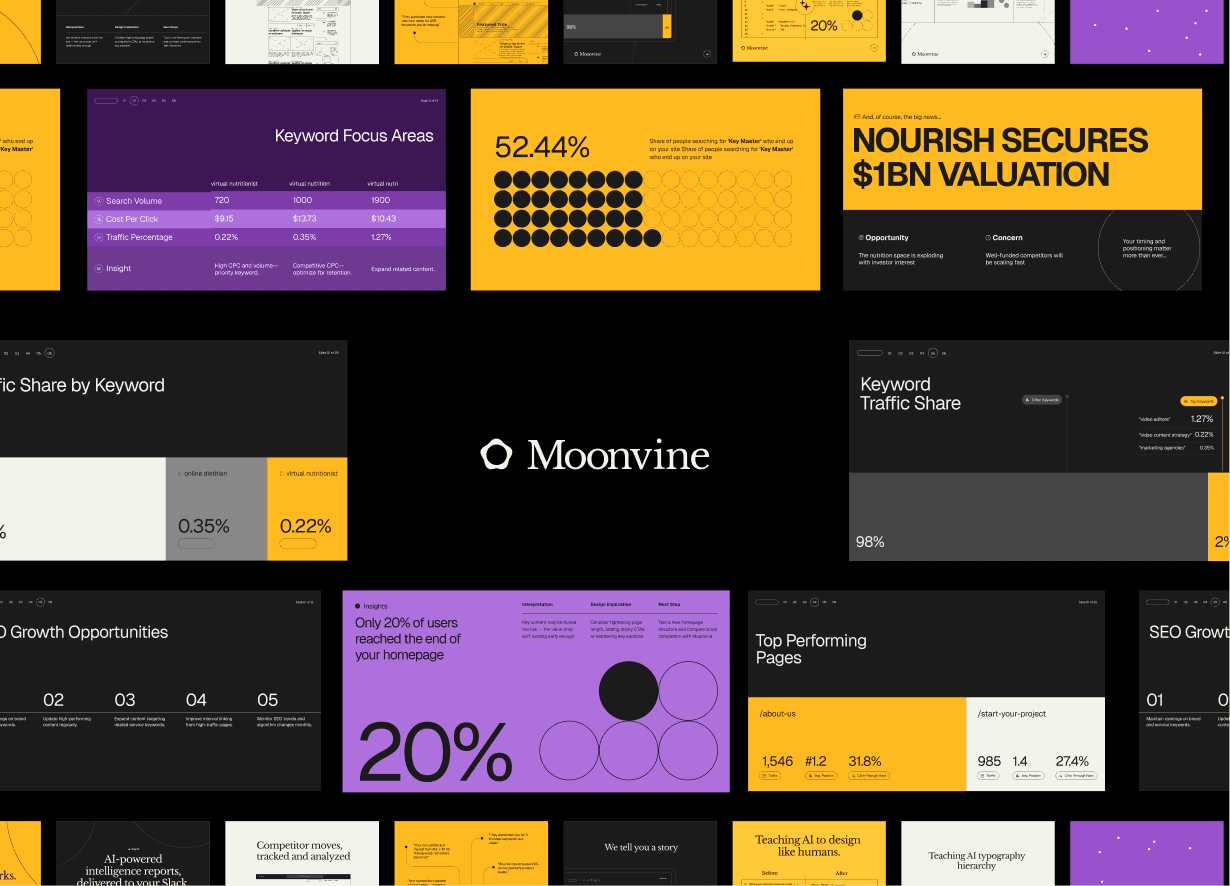
We built one for Moonvine. Their color isn't a palette, it's a system: a base layer of core colors feeds a layer of named, reusable variables, so switching the entire theme is one click instead of a man.
A logo that generates itself
Their logo isn't even a fixed file. It's code we call the Flower Generator: change a few parameters and it produces an endless range of forms, all unmistakably Moonvine. Infinite on-brand variations, without a designer redrawing the mark every time.
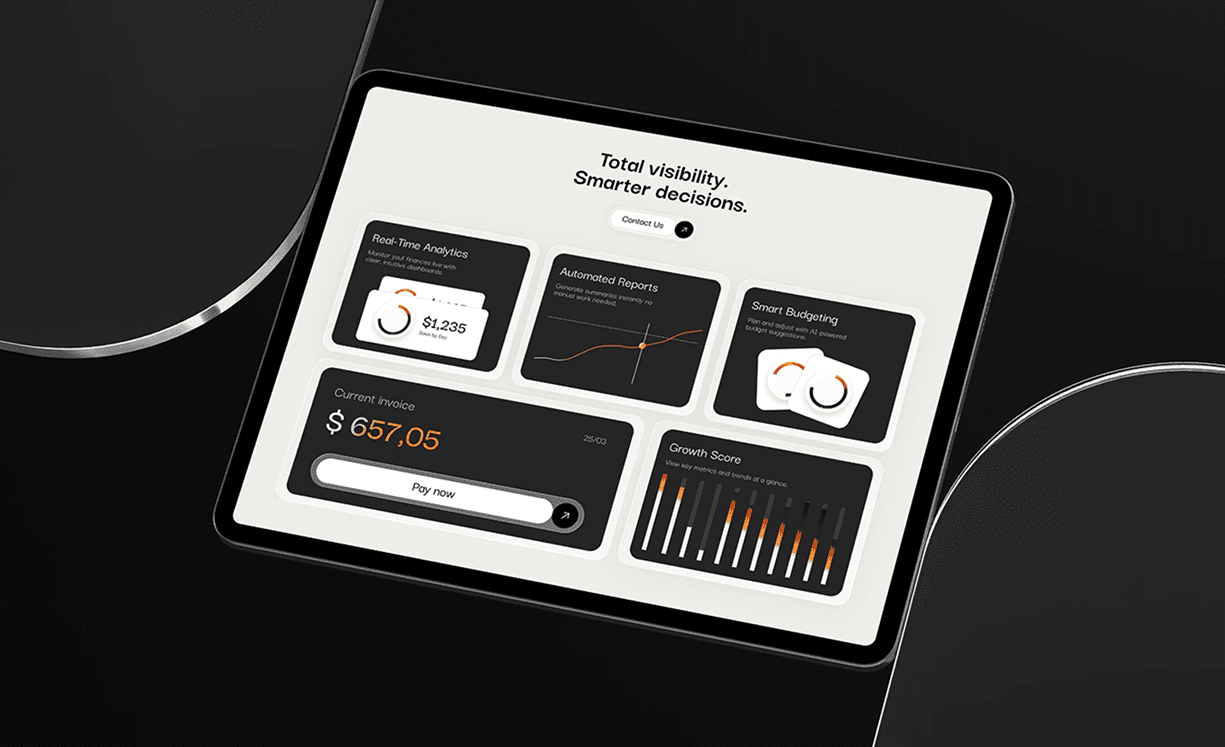
And because Moonvine didn't have a finished product yet, we built the system at the brand level: broad enough to produce an app screen, a website section, or a social post, and keep all of them recognizably the same brand.

The catch: a system is only as good as the team that builds it
Here is the part most people miss. A brand system isn't plug-and-play. Built wrong, it's a folder of files nobody uses. Built right, it's the thing that holds a brand together and cuts production time for years.
The difference is the team behind it. Structuring a system, naming it, and setting it up so it survives real use is its own craft. Hand the idea to a designer without that experience and you get something that looks like a system but falls apart the first time the brand needs to stretch.
That's the part we do. We've built these systems, we apply them across projects, and we've seen exactly what they do to a brand's consistency and a project's timeline.
The point isn't speed. It's a brand that holds together.
A brand system isn't about generating assets faster, though it does that too. It's about generating them consistently, so the output stays on-brand no matter the input, and no matter how much you scale.
So when you're looking at a brand that has to grow without falling apart, the real question isn't whether to have a brand system. It's who's going to build it right.
Thinking about a brand that has to scale without falling apart? Let's build the system for it.