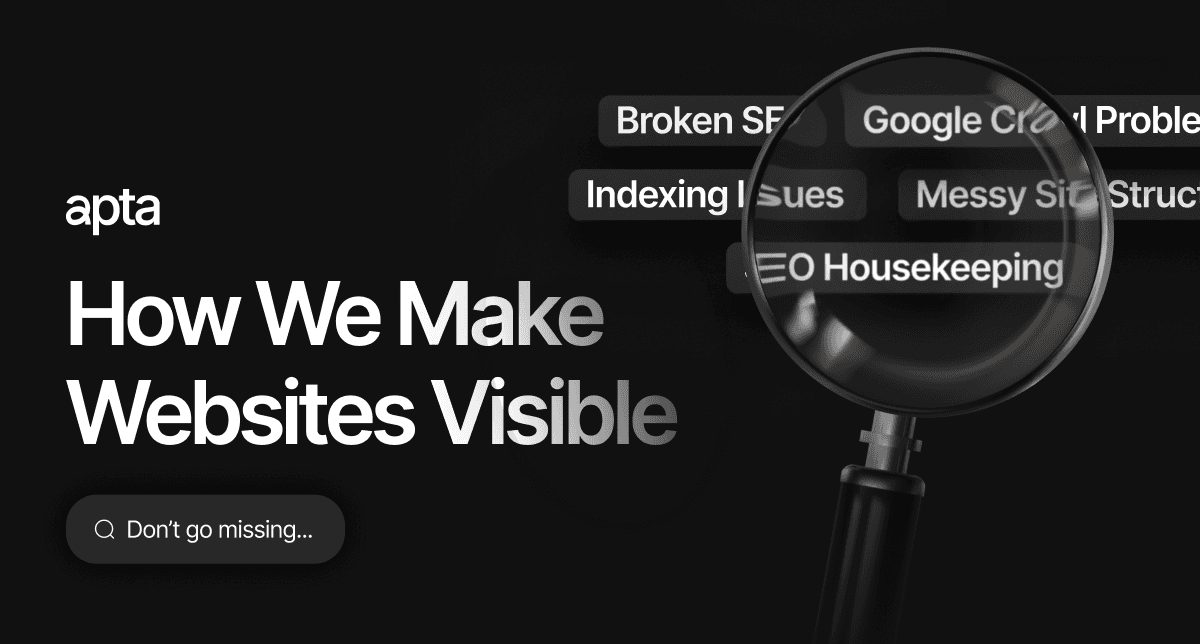
Most businesses spend months building a beautiful site, but barely any time making sure it can be found.
SEO is the difference between a site that works quietly in the background bringing in traffic, and one that just sits there looking nice, invisible to the one thing that actually brings people in: search. If you run an agency, that difference matters twice: once for your own site, and once for every client whose results depend on it too.
This one, we're opening up exactly how we approach it, including the audit most agencies never show anyone.
The part nobody sees before the first fix.
Every project starts with a full audit, part manual, part AI-assisted. We run the site through Claude first to get an initial pass on what's wrong, then go through it manually ourselves, and the process changes depending on the platform.

On Webflow, we go page by page checking SEO settings and overall site configuration.
On WordPress, plugins handle some of the technical checks automatically, so we focus more on text hierarchy and page structure.
On Framer, this is newer ground for us, and one of the first deep audits we're planning to run is on our own site, just to see what we'd flag if a client handed it to us.
But some parts of the audit don't change no matter the platform. We look at how heavy the images are and whether they're slowing the page down. We check load times page by page to find exactly what's dragging them out.

Once we know what's wrong, we fix it page by page.
Every page gets a focus keyword, something specific it's actually meant to rank for, instead of competing with every other page on the site for the same term. The title tag gets rewritten to describe what the page is, not just name it.
The meta description gets rewritten too, this time to make someone want to click, not just to fill a field that would otherwise show up empty.
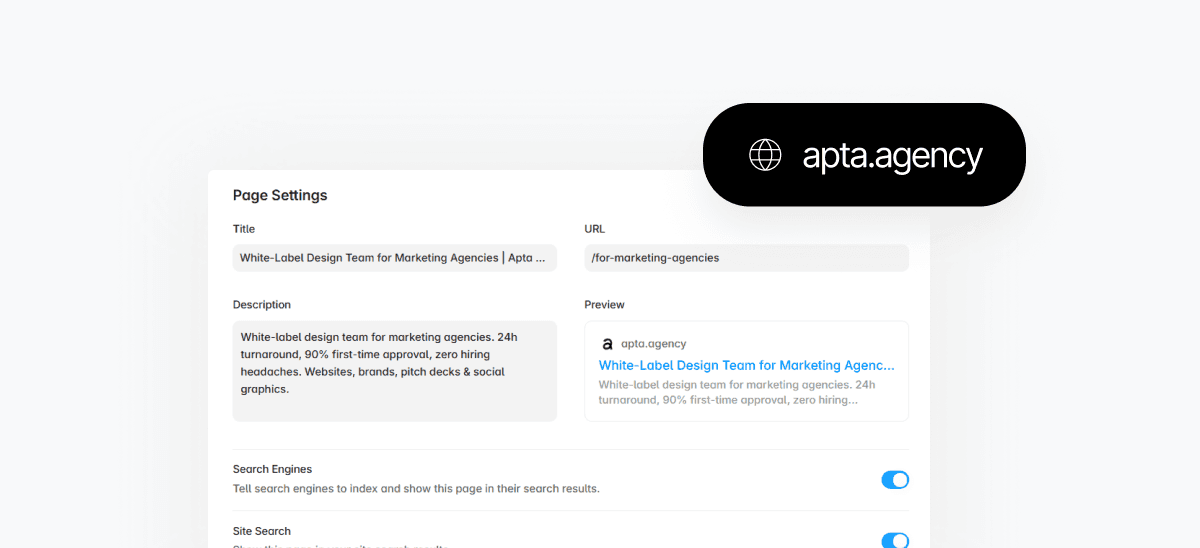
Even the images get renamed, because what they're called matters just as much as what they show, both to search engines and to AI models reading the page.
Underneath all of it: the technical layer.
We make sure every Google tool connected to the site, Analytics, Search Console, Tags, My Business, actually matches what's live on the site, because Google can't rank a site properly when the data doesn't line up.
We build a full sitemap so nothing gets missed, turn on nofollow for external links so future partnerships never quietly leak authority, add a 404 monitor so broken paths get caught, set up redirects so nobody hits a dead end, and add schema markup so any system reading the site, human or AI, understands exactly what it is and who it's for.
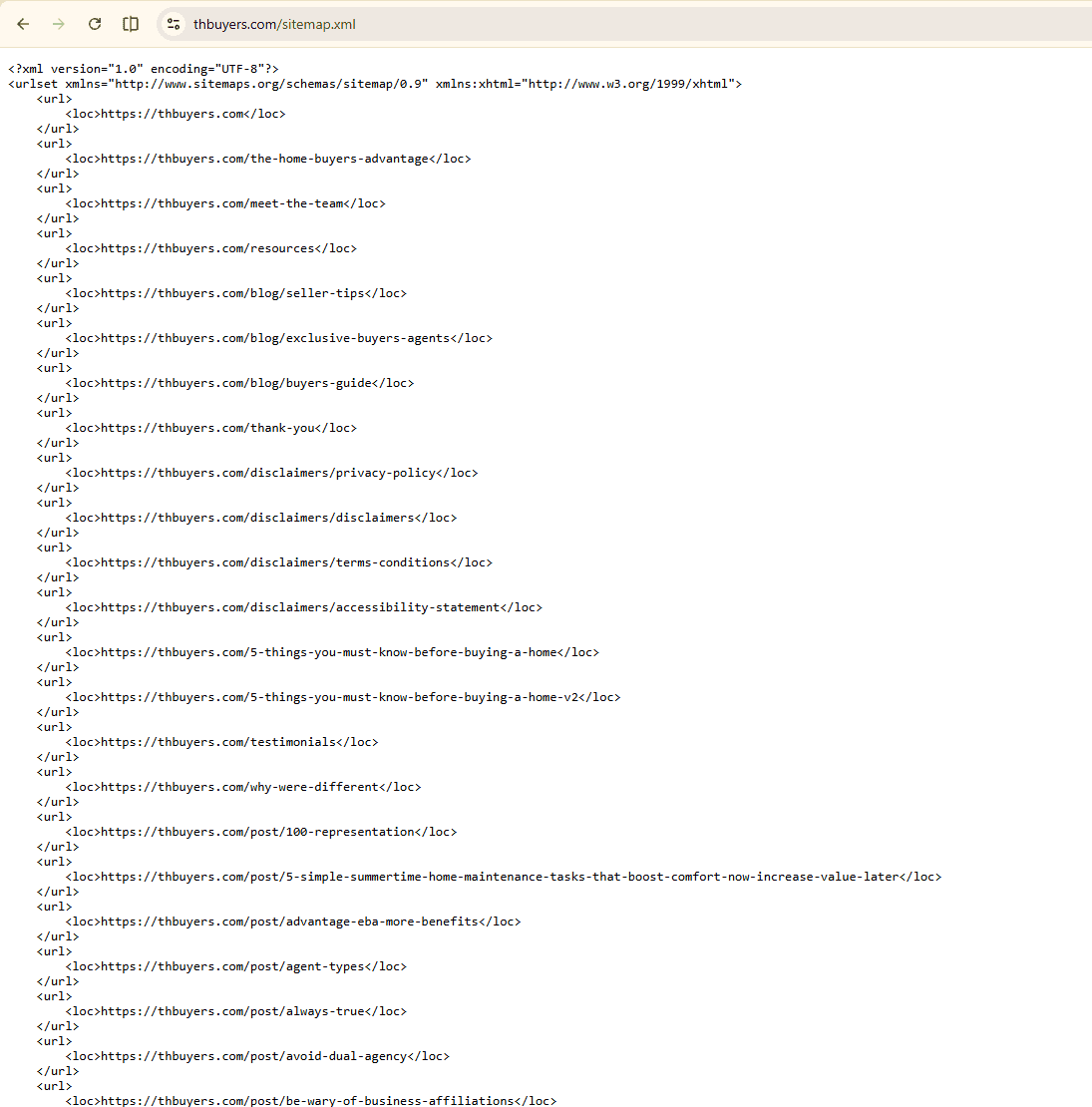
Google Search Console verified. Google Business registered. Every page visible, measurable, crawlable, and built to actually rank.
Here's what that looked like.
We ran this exact process for a client whose site wasn't showing up on Google.
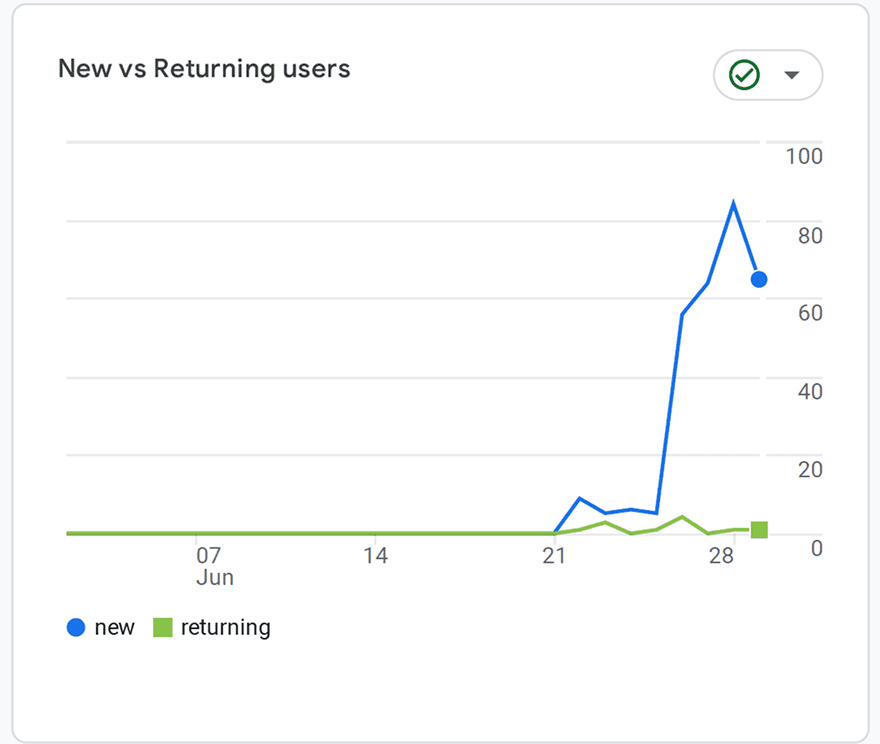
Look at what happened the week we went in. The line stays flat until June 21st, then it doesn't. New users go from single digits to over 80 in a matter of days. That jump isn't traffic that showed up on its own. It's what happens when a site stops being invisible.
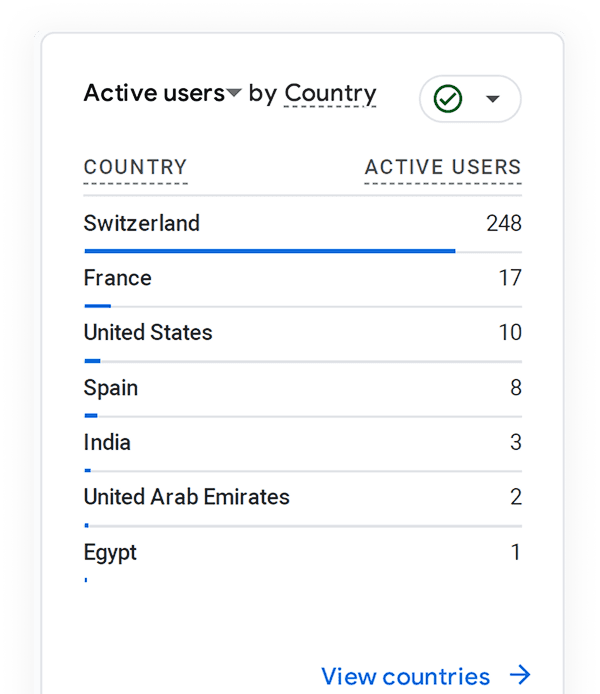
The client's goal was simple: show up in Switzerland. And that's exactly what happened.
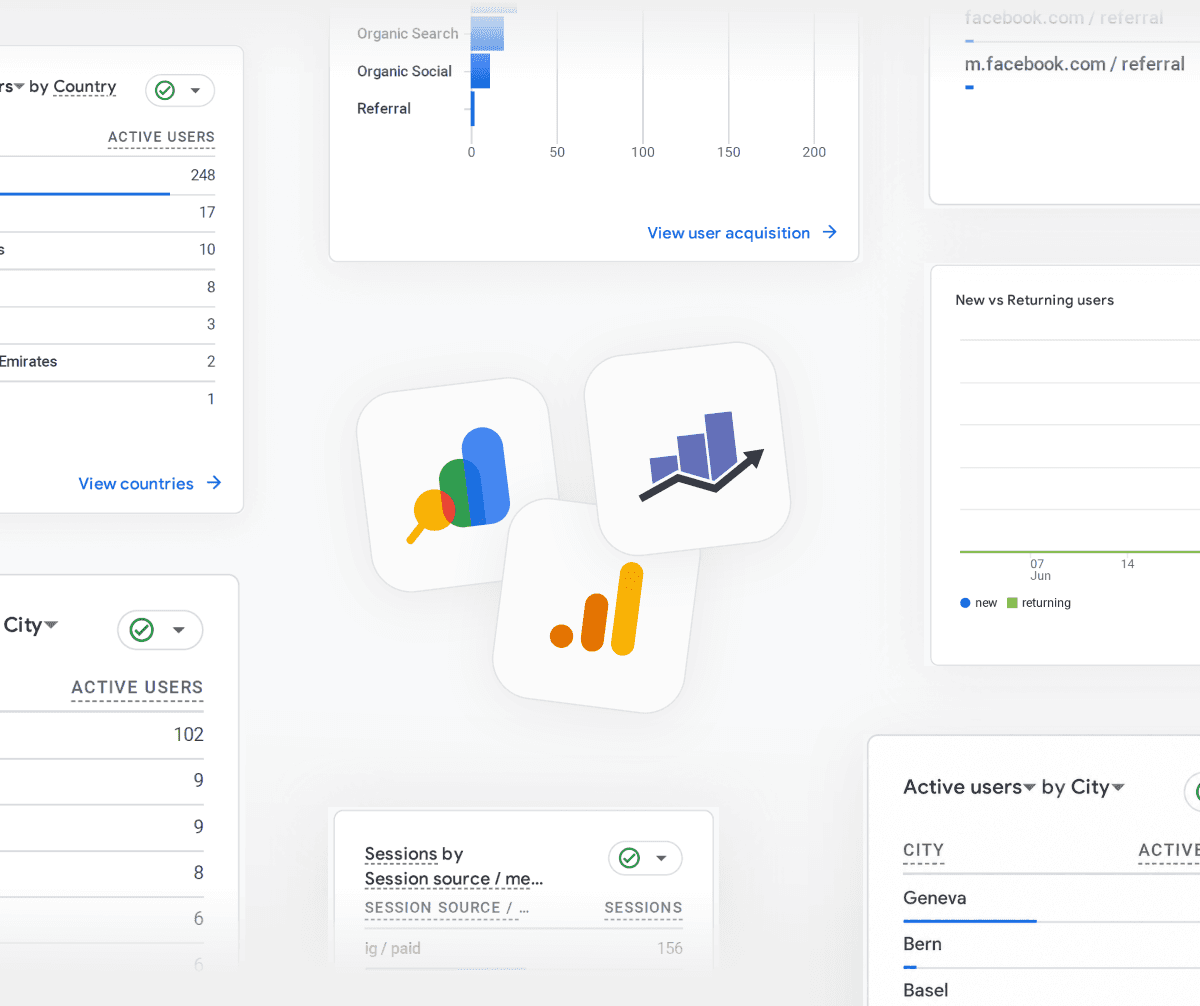
Switzerland accounts for the vast majority of active users, 248 out of the total, the clear result of the site now ranking where it actually matters. The other countries on the list, France, the United States, Spain, India, are smaller numbers, incidental traffic, likely from ads or shared links, not the target.
The real result is the one that mattered from the start: a site that used to be invisible in its own market is now the one showing up there.
And we don't stop watching once it's live.
Most agencies hand over a report and disappear. We don't work that way.
Every SEO project comes with ongoing monitoring through Google Search Console and GA4, for as long as the client wants it. Starting at 7 days, going as far as they need.
Rankings, traffic, technical errors, tracked in real time, so problems get caught before they become a pattern.
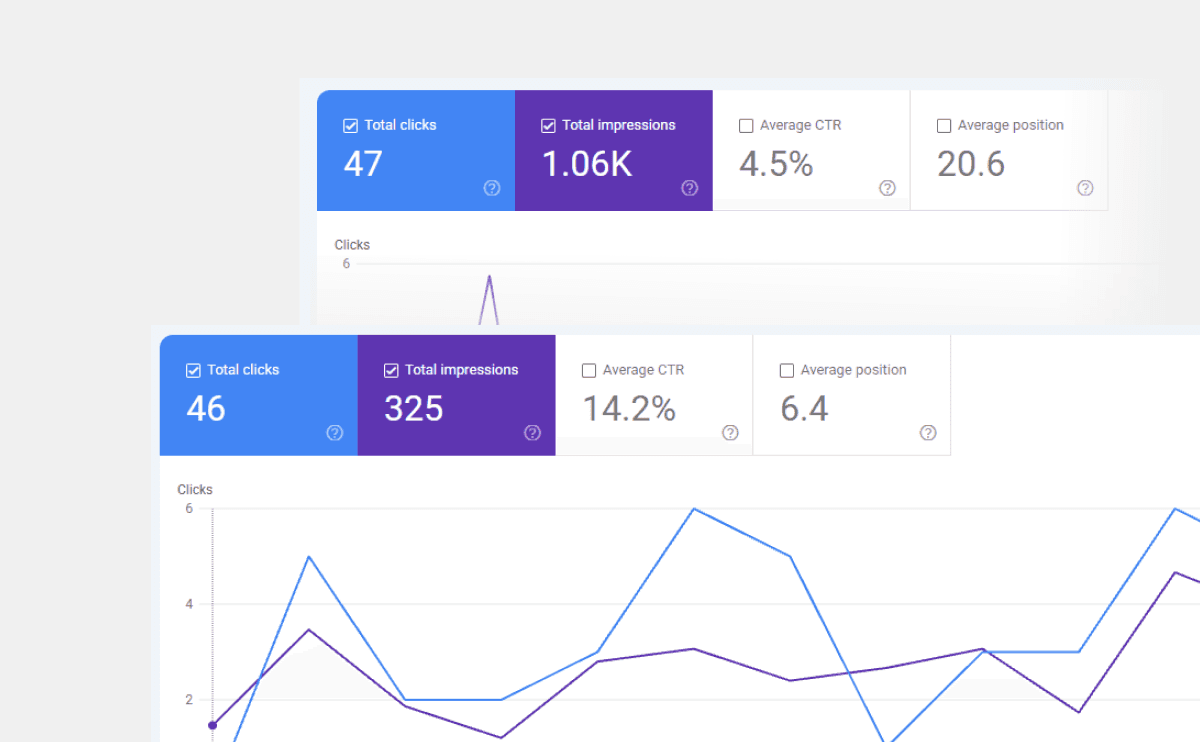
We ran the same process on our own site.
Same logic, same discipline. Before touching a single line of copy, we mapped every page, every component, every piece of content that wasn't earning its place. Pages that existed just because nobody had removed them.
Components duplicated across the site instead of reused. Content locked in static pages instead of living in a CMS where it could actually scale.
We rebuilt it from the ground up. Fewer pages, each with a clear purpose. Components consolidated so one update applies everywhere instead of ten. More content moved into the CMS, structured to grow without needing a redesign every time something changes.
We wouldn't run a messy structure on our own site. We won't run one on yours.
That's the difference between a site that looks good and a site that actually works. If your website looks great but isn't showing up where it matters, the fix usually isn't a redesign, it's an audit.
Want us to run one on yours?